
0–45° Angle Cutting Station – 2–52mm Stop, Laser Grid, 3 Blades (ACR-01)
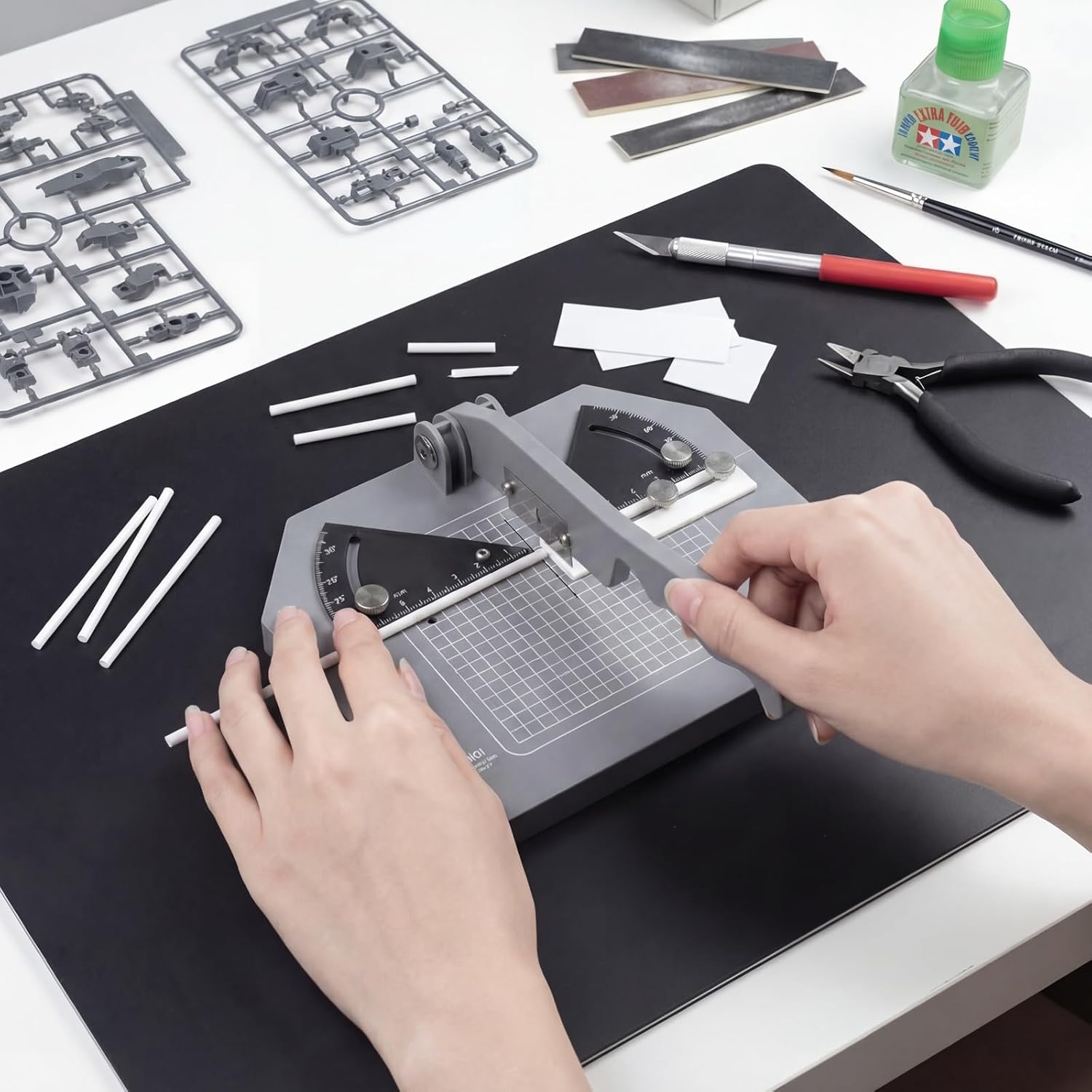
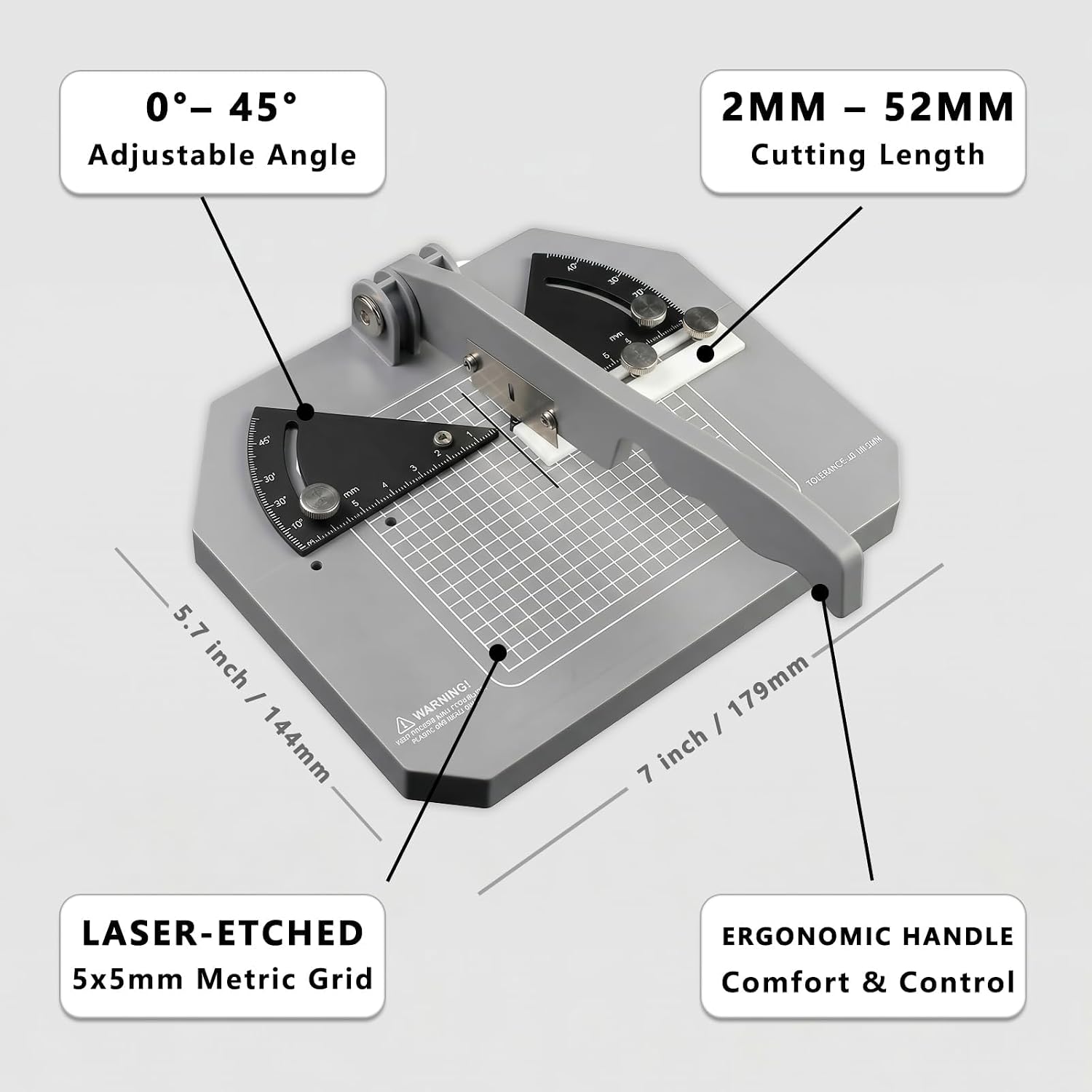
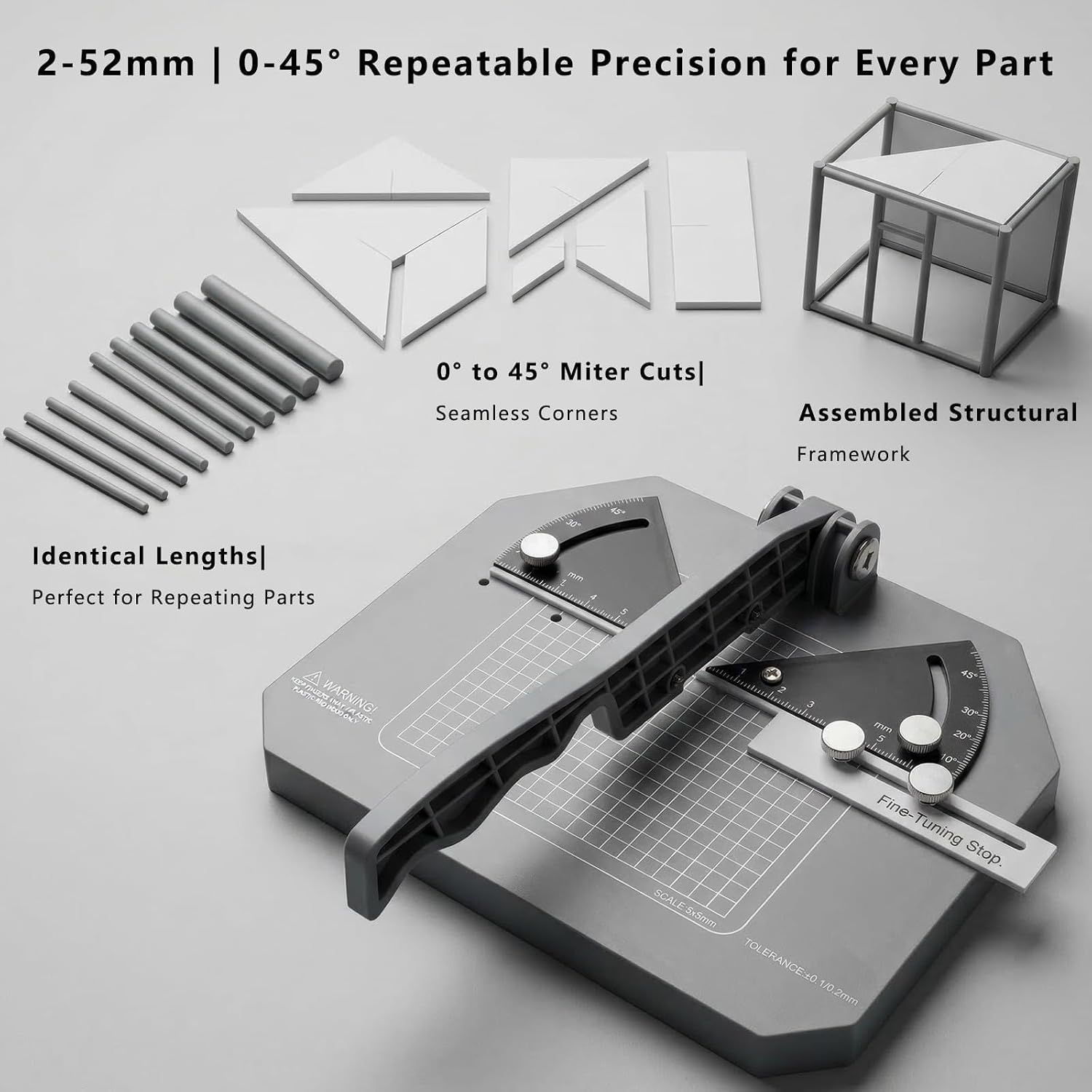
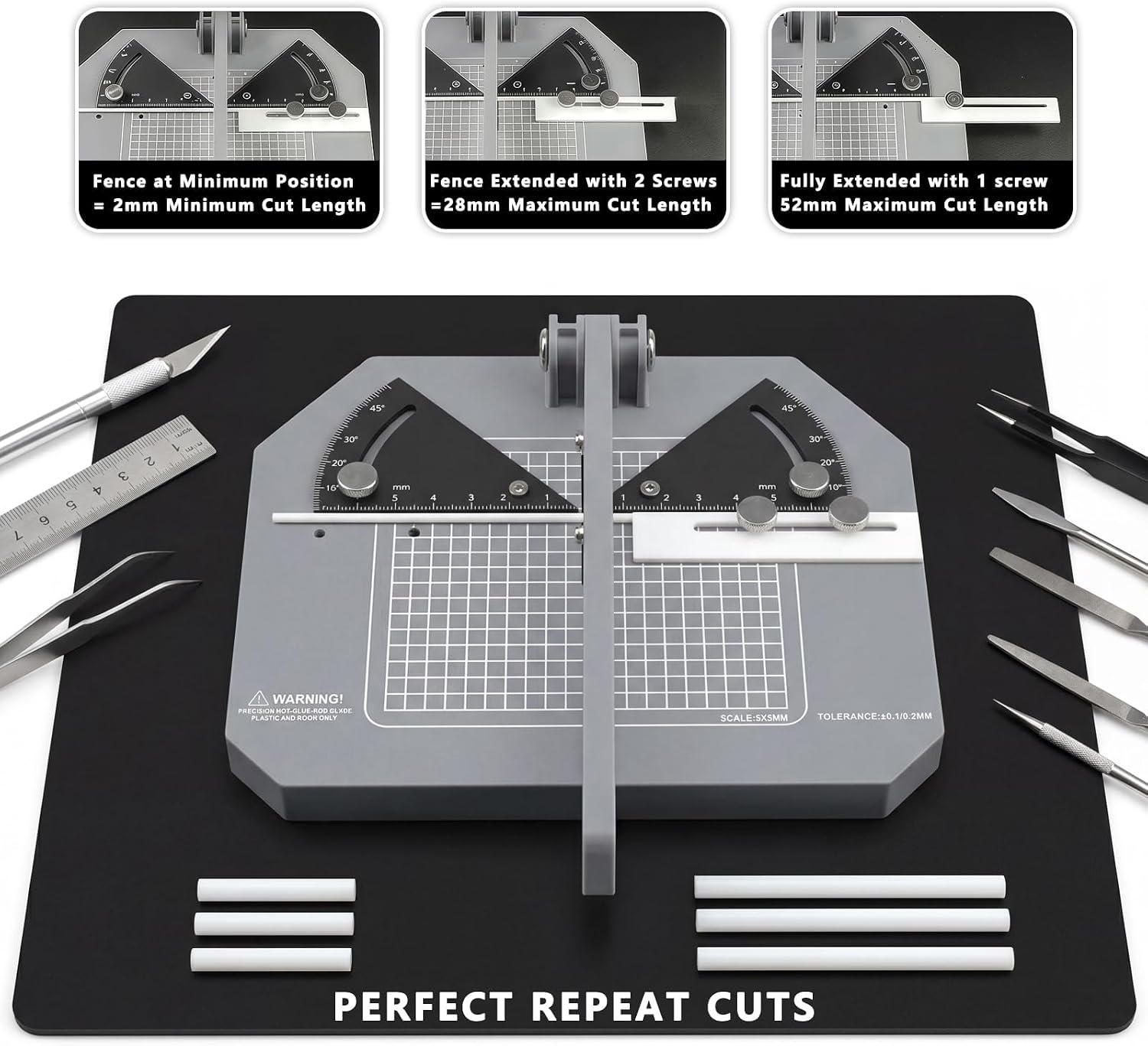
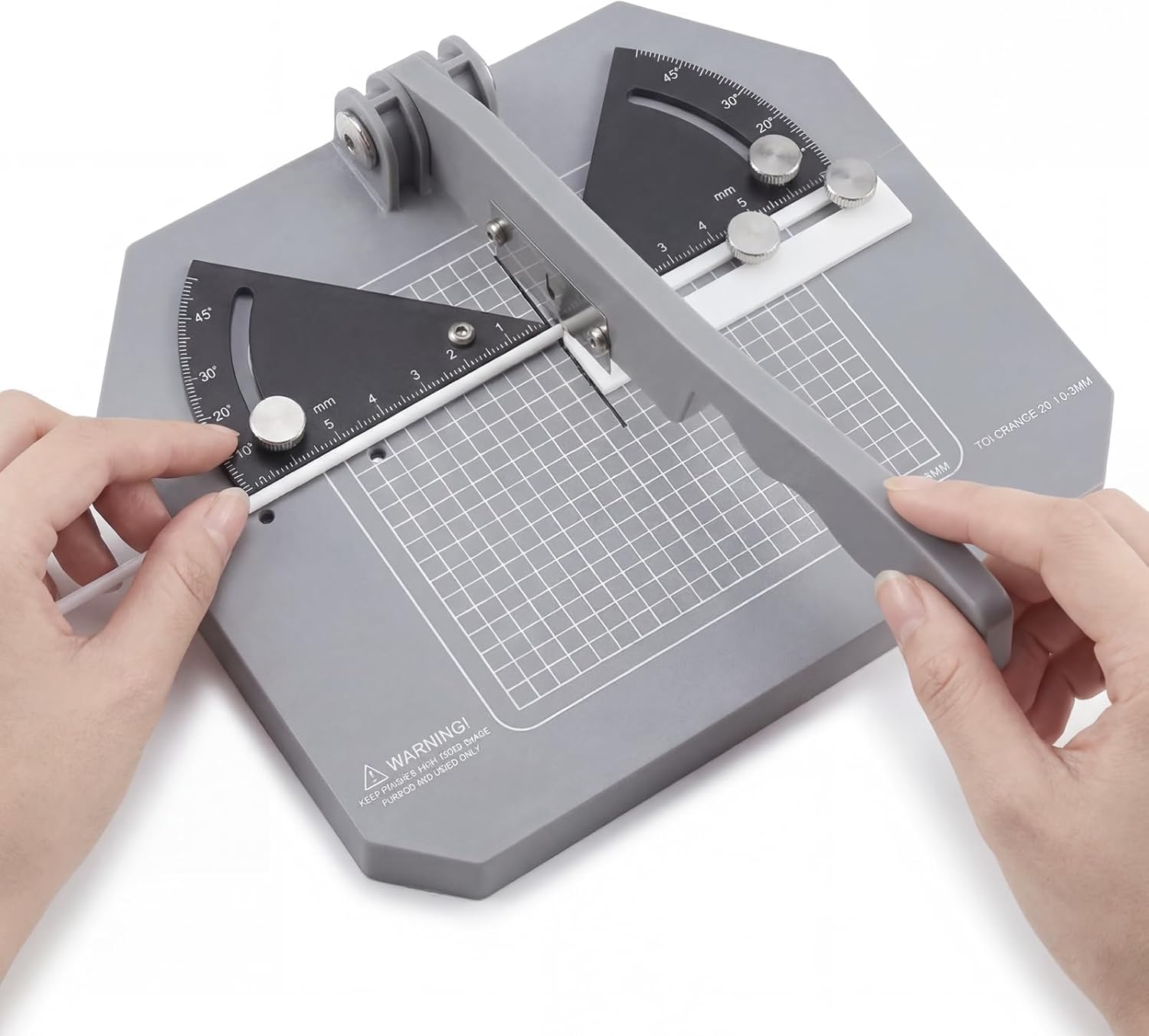
Built for scratch-building, this compact station cuts styrene rods, beams, and sheets at any angle from 0 to 45 degrees, with the adjustable stop set anywhere from 2 to 52 mm—so miter corners, repeated parts, and custom mods all come out identical, cut after cut.
Laser-etched 5 x 5 mm grids and angle scales let you verify length and angle at a glance, no caliper needed, holding tolerance to about 0.1 mm. The 144 x 179 mm base fits any crowded workbench, and the ergonomic handle presses cuts through dense plastic with zero crush and no burrs.
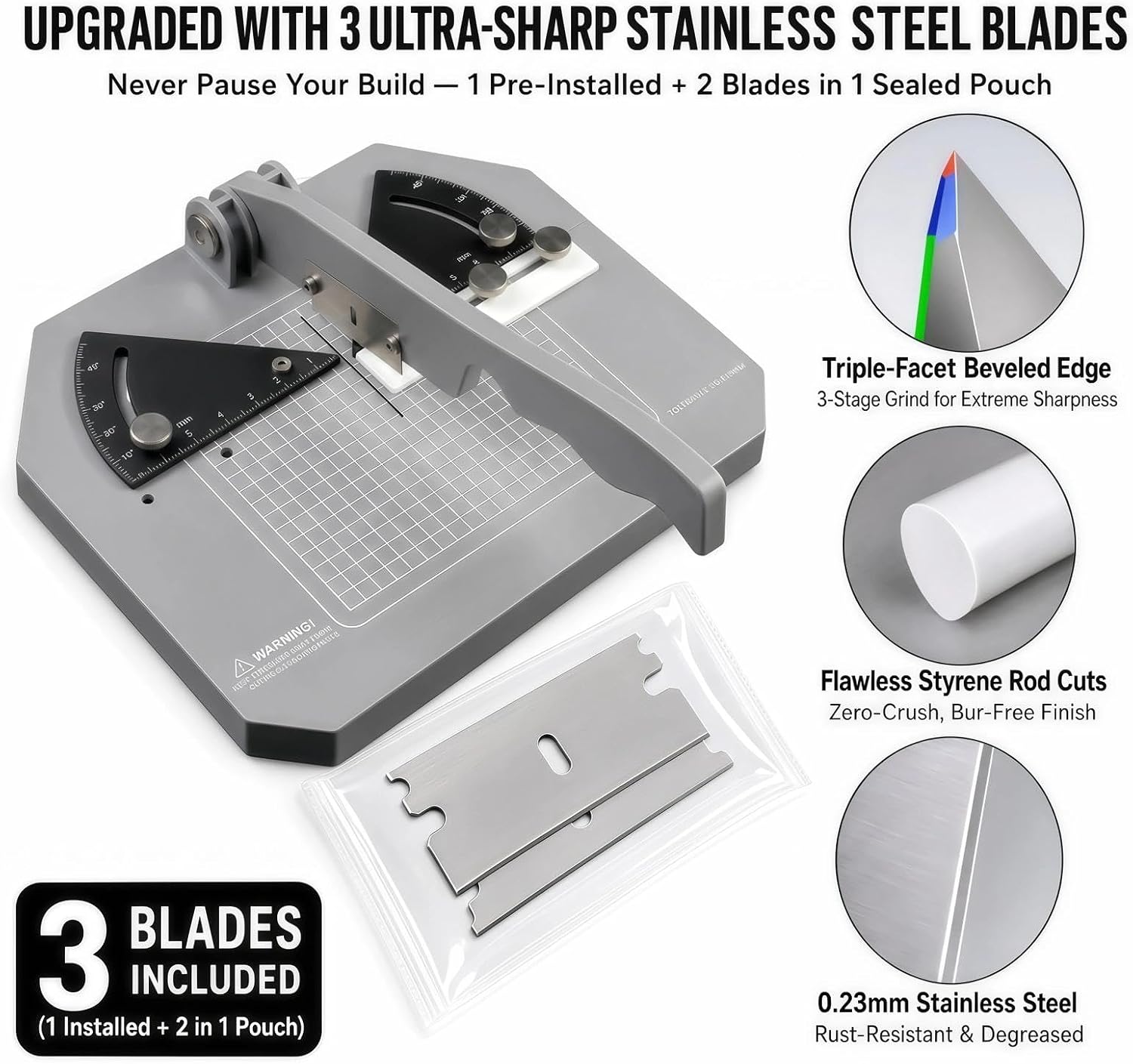
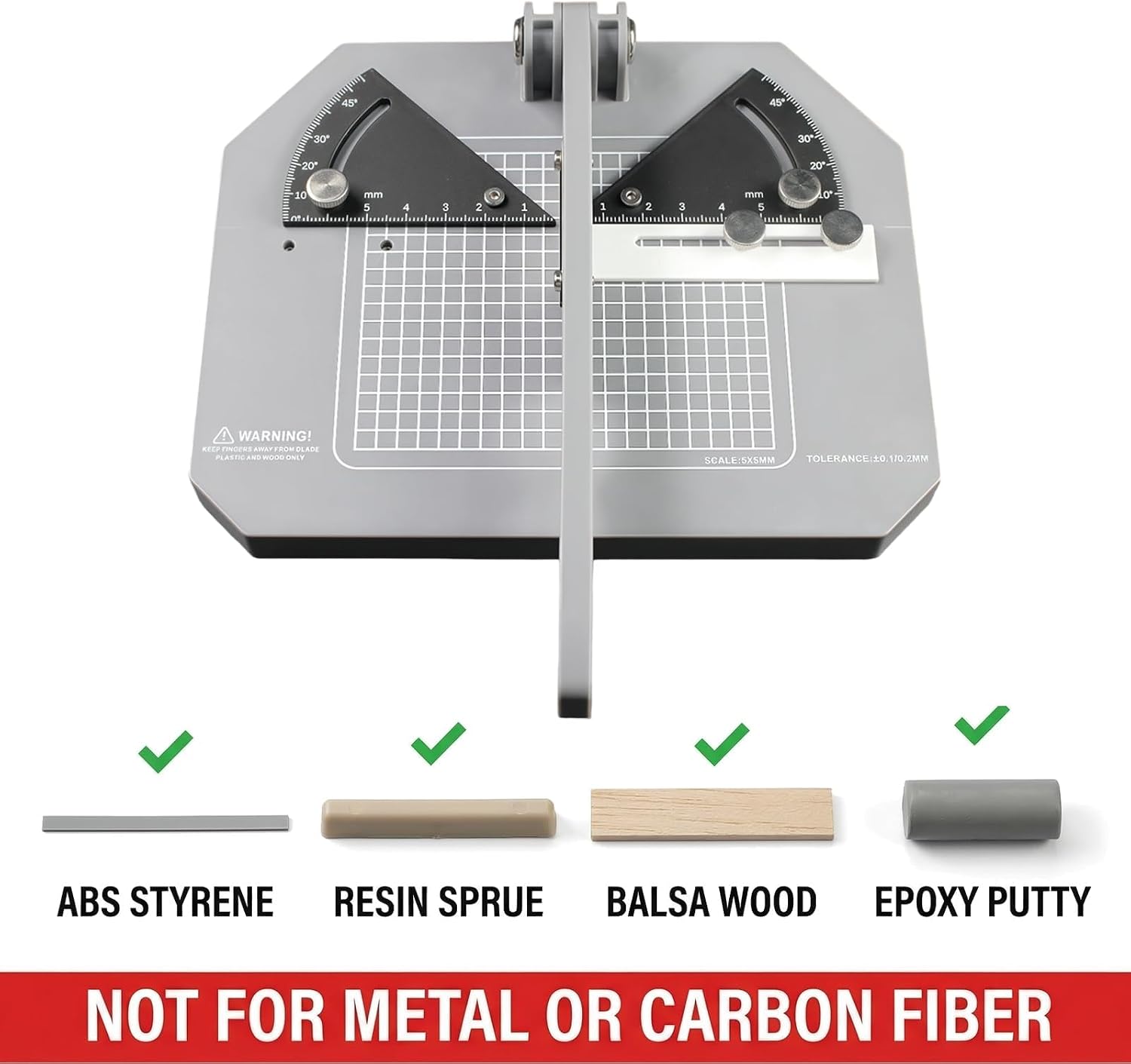
Three ultra-sharp 0.23 mm stainless steel blades ship in the box (1 installed + 2 in a sealed pouch), so clean cuts continue after the first edge dulls. The lightweight ABS body is calibrated for styrene, ABS, resin, balsa, and epoxy putty—not for metal or carbon fiber.
FAQ
1. Question: How does the 2–52 mm length stop work, and why does it matter?
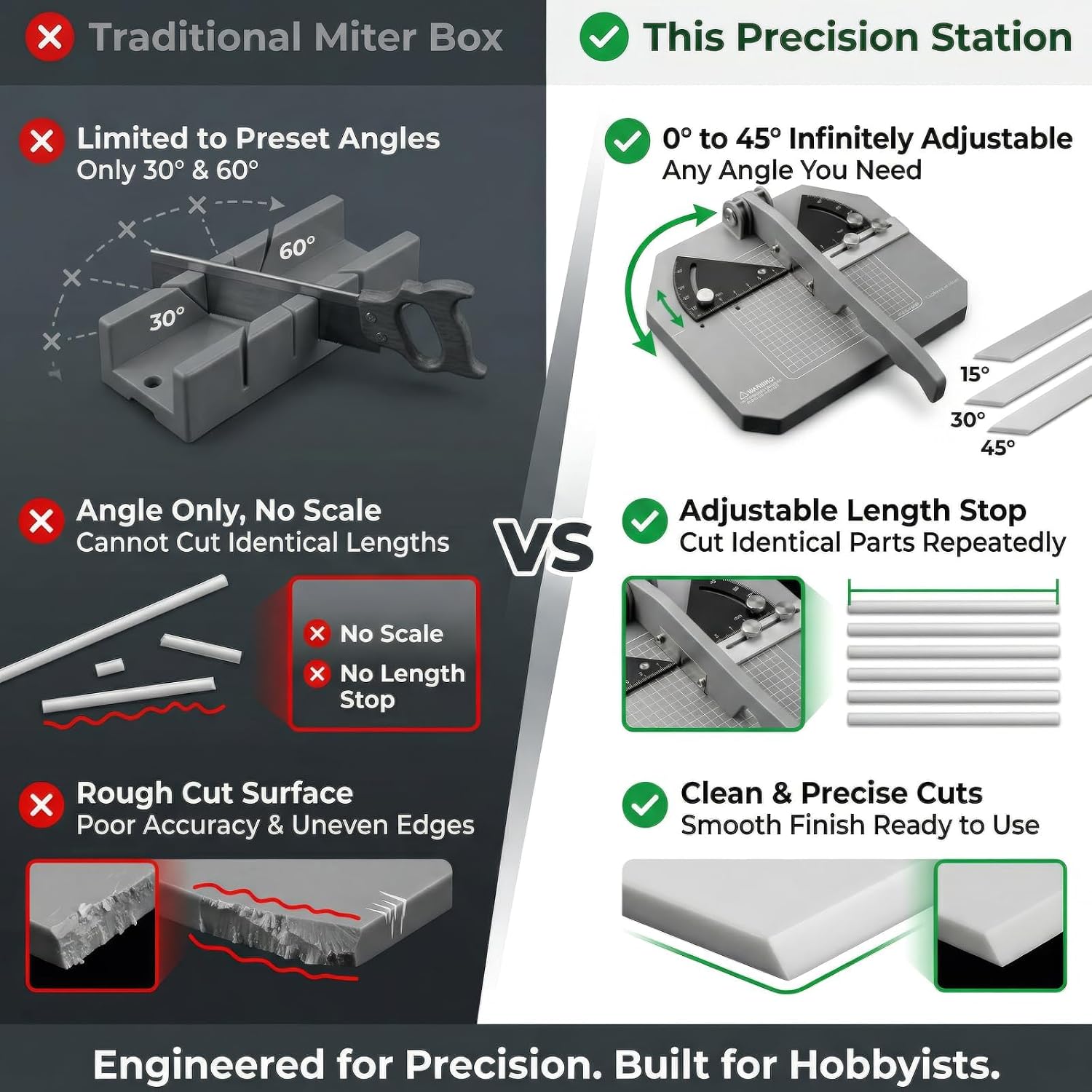
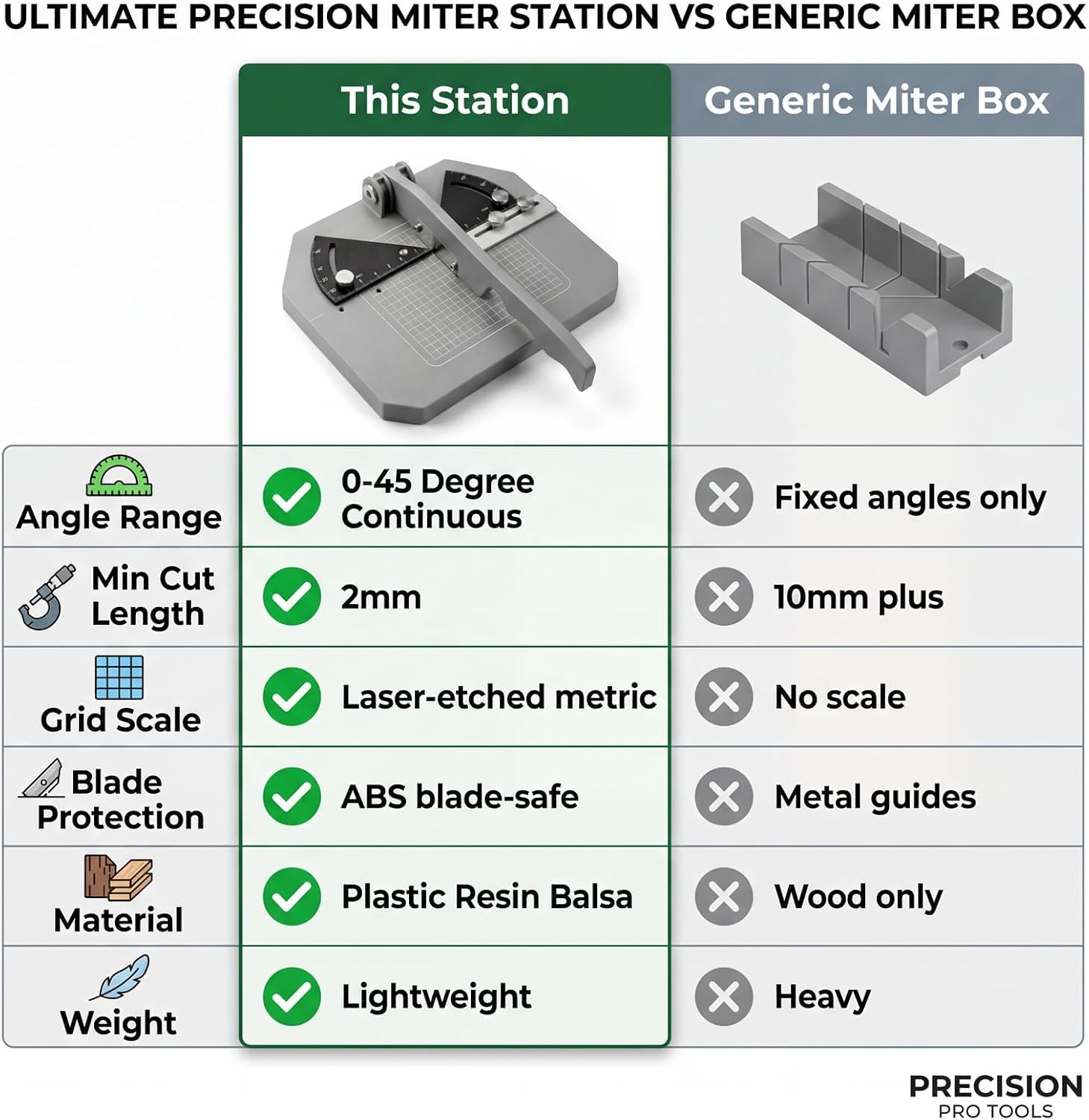
Answer: The white fence slides in a track to set cut length: at its minimum position it cuts 2 mm pieces, extended with two screws it reaches 28 mm, and fully extended it cuts up to 52 mm. Once set, every piece comes out the same length, which is exactly what repeating parts—struts, frames, identical ribs—demand. A traditional miter box has no stop at all, so each cut is measured and marked by hand.
2. Question: What angles can it cut, and how accurate are they?
Answer: Unlike a miter box limited to preset 30 and 60 degree slots, this station adjusts continuously from 0 to 45 degrees, so you can cut any angle a scratch-build needs—15, 30, 45, or anything between. The protractor scales are laser-etched and lock with a knob, holding tolerance to roughly ±0.1–0.2 mm, tight enough for seamless miter corners on Gunpla frames and architectural models.
3. Question: Which materials can I cut, and which should I avoid?
Answer: The station is calibrated for hobby plastics and soft materials: styrene and ABS rods, beams, and sheets, resin sprue and cast parts, balsa wood, and epoxy putty. Do not use it on metal or carbon fiber—both will damage the thin blade edge and can cause dangerous kickback. Keep fingers away from the blade area during cuts; the tool is designed for plastic and wood only.
Products categories
-
0–45° Angle Cutting Station – 2–52mm Sto
-

US Style High Precision Scissor Pliers(M
-

US Style Tweezers Nose Pliers(MPU-001)
-

US Style Electrical Wire Cable Cutter(MP
-

US Style High Precision Cable Cutter(MPU
-

Japan Style Small Electronic Pliers(MPJ-
-

Japan Style Middle Electronic Pliers(MPJ
-

Japan Style Large Electronic Pliers(MPJ-